

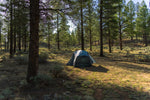
Wooded Backcountry Camping: Solitary Wilderness Travel in Beaverhead-Deerlodge National Forest
, by OFFICIALLETWESAF, 6 min reading time
, by OFFICIALLETWESAF, 6 min reading time
Montana’s old-growth forest backcountry offers a brand of peaceful, unspoiled outdoor recreation you can’t find anywhere else in the American West.
 Thick stands of evergreen trees, quiet mountain drainages, and total freedom of dispersed camping make Beaverhead-Deerlodge National Forest a top destination to escape crowded developed camping sites and enjoy quiet wilderness solitude.
 However, this untamed woodland environment comes with one unavoidable downside: dense foliage and heavy tree cover create constant visual blind spots after dark, making it nearly impossible to fully track surrounding wildlife activity with the naked eye during overnight stays, which is why I bring my LETWESAF camping perimeter alarm for reliable woodland campsite protection.
As Montana’s largest national forest, Beaverhead-Deerlodge covers an immense stretch of rugged southwestern Montana terrain, featuring dense evergreen groves, winding mountain drainages, and sprawling meadow systems that transition sharply into thick forest undergrowth. I chose a secluded backcountry site located well off the main scenic byway, accessible only by a narrow, rocky dirt road. True to dispersed camping rules, my spot was completely undeveloped: no fire rings, no designated pads, no restroom facilities, and absolutely no cell service. Daytime conditions offered cool shade and steady breezes ideal for hiking and exploring hidden creek corridors, but the dense tree canopy completely transforms the environment after sunset, turning the forest floor into a shadowy, active wildlife zone with nearly zero visibility.
After years of exploring western U.S. wilderness areas, I’ve found forest backcountry camping carries a uniquely subtle risk profile compared to desert or coastal outdoor travel. Open terrain lets you see movement from hundreds of feet away, but thick woodland foliage hides all peripheral activity. Per United States Forest Service backcountry guidance, this forest supports robust populations of opportunistic wildlife including raccoons, deer, elk, and wide-ranging bobcats, all of which grow adept at navigating human campsites after dark in search of food odors and residual scraps. The combination of shadowed underbrush and muffled sound creates a constant low-level uncertainty that defines every night spent in thick Montana woods.
I adhere strictly to standard forest camping best practices to minimize wildlife attraction at every stop. I implement full scent control by storing all food and toiletries in sealed bear-resistant storage, sanitize all cooking surfaces immediately after use, and maintain a wide buffer between my cooking zone and sleeping tent. Even with flawless field discipline, I cannot eliminate the faint ambient scent of outdoor meal prep entirely. In thick forest environments, those subtle odors linger in cool night air and drift through underbrush, drawing curious wildlife toward camp regardless of how clean I keep my site.
This unresolvable minor risk created consistent sleep disruption for the first two nights of my trip. Every rustle of dry leaves, every small branch shift in the breeze, and every distant scuffling sound in the underbrush forced me to scan the treeline repeatedly throughout the night. Unlike open terrain where you can visually confirm safety quickly, forest darkness forces prolonged, tense observation. I’d frequently lie awake for long stretches, unable to settle fully, which left me mentally drained and less present for daytime trail exploration and wildlife viewing opportunities.
Rather than burning myself out with repetitive, hours-long visual scans every single night, I opted for a low-effort, high-reward safety upgrade on my third day out. I set up my LETWESAF camping perimeter alarm unit to cover the sprawling blind spots around my woodland campsite, focusing on overgrown trail edges and shaded transition zones that are impossible to monitor consistently by eye alone. I stuck firmly to standard USFS clean-camping and scent-control practices to minimize wildlife attraction, while letting the device handle the tedious, never-ending work of perimeter tracking that normally eats into my rest and outdoor recovery time.
The difference in my overnight camping quality was immediate and transformative. For the first time on the entire trip, I didn’t need to stay mentally wired and hyper-aware of every tiny forest sound. Once I finished securing my camp, stowing all gear, and cleaning my cooking area, I was able to rest naturally inside my tent, confident that unexpected perimeter movement would be detected without constant manual checks.
Midnight brought a clear, deliberate alert from the device, signaling confirmed movement at the edge of my camp perimeter. I activated a dim red headlamp to preserve night vision and avoid startling local wildlife, then performed a slow, methodical visual check. A young raccoon had emerged from the thick treeline, investigating faint residual food scents hovering near the underbrush edge. The timely alert interrupted its forward advance early, giving the animal time to recognize the active campsite and retreat voluntarily back into the deeper forest without approaching my tent or personal gear.
I experienced uninterrupted, high-quality sleep and woke at dawn feeling fully rested and alert, ready to explore the forest’s extensive trail networks, alpine creek corridors, and quiet meadow systems.
This trip reinforced a set of hyper-relevant best practices for anyone camping within Beaverhead-Deerlodge’s dense woodland terrain. Always establish camp well away from dense underbrush thickets and natural animal travel corridors. Complete all meal cleanup and food storage while sunlight remains abundant, as forest wildlife becomes far more active in low-light conditions. Separate cooking and sleeping zones by significant distance to prevent scent accumulation near resting areas. Utilize passive perimeter monitoring tools on multi-day backcountry trips to preserve mental energy and avoid camping burnout.
Woodland backcountry camping represents the most authentic form of American outdoor exploration,raw, quiet, and deeply immersive. These wild spaces reward preparation and respect, offering unmatched solitude you cannot find at developed campgrounds. Smart safety habits never detract from outdoor adventure; they simply let you explore more freely and connect deeper with natural surroundings.
 Over three days of solitary forest travel, I soaked in the quiet grandeur of Montana’s most expansive national forest, enjoying unfiltered access to untouched woodland ecosystems. Integrating LETWESAF into my backcountry setup removed the mental burden of nonstop nighttime watch duty, allowing me to focus entirely on wilderness immersion rather than campsite security.
The most rewarding outdoor journeys balance bold exploration with thoughtful preparedness. Respecting wild forest habitats and equipping yourself with reliable safety tools lets you venture deeper into remote terrain, creating authentic outdoor experiences grounded in caution and curiosity.
Do you prefer dense woodland backcountry camping or open alpine wilderness trips? What small, persistent nighttime wildlife concern bothers you most on multi-day forest camping trips? Share your honest outdoor camping experiences in the comments.
*Sources
United States Forest Service. Beaverhead-Deerlodge National Forest Backcountry Camping & Wildlife Safety Rules. https://www.fs.usda.gov/bdnf

