

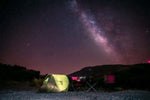
Red Rock Canyon Camping: Shooting Early July Milky Way Without the Wildlife Paranoia
, by OFFICIALLETWESAF, 7 min reading time
, by OFFICIALLETWESAF, 7 min reading time
I bailed on my weekend plans last minute to drive 2 hours north to Red Rock Canyon State Park, all for one thing: the start of peak summer milky way season.
 Early July brings the first full, bright arch of galactic core over the red sandstone cliffs, perfectly framed for wide angle shots once full dark sets in.
 I hauled my camera bag, tripod, and beat-up cooler of iced coffee out of the closet, and while digging through my gear bin for spare batteries, I spotted my LETWESAF camping perimeter alarm.
I’ve been camping and shooting at Red Rock Canyon every early July for three years, so I know the campground layout like the back of my hand. I picked a secluded walk-in campsite set back from the main campground loop, surrounded by Joshua trees and low desert cactus. It’s a brief walk from the parking area, with minimal light pollution from camp facilities, and opens right up to a wide dry wash that frames the cliff line perfectly for sunset and star shots.
The tradeoff is that there’s no natural buffer between the site and the open desert. Animals use that dry wash like a highway at night: jackrabbits, kit foxes, coyotes, even the occasional skunk, all cruise through looking for food scraps or water. Early July heat pushes them to move more after dark, as they hunt for any moisture they can find to beat the soaring daytime temperatures.
The sand carries sound for miles, too, which makes every small noise feel closer than it really is. A rustle 100 yards out sounds like it’s right behind your camp chair, and it’s nearly impossible to tell a harmless tumbleweed from a curious animal just by sound. That uncertainty is what always ends up ruining my focus on photo nights.
My first night went exactly how it always goes. I waited until after 8 p.m. for the worst of the heat to fade, then set up my tripod 20 feet from the tent right after blue hour, dialed in my settings, and started shooting 30-second long exposures. 45 minutes in, I heard it: slow, deliberate scratching in the wash, off to my left.
I froze, grabbed my flashlight, and blasted the beam across the sand. Nothing turned up, just wind blowing dry tumbleweeds across the wash bed. I spent the rest of the night glancing over my shoulder every two minutes, interrupting exposures left and right to scan the dark.
I bailed and packed up my camera gear an hour early, too on edge to stick around for the core to hit its peak overhead. It’s been this way every trip, and I’ve got plenty of bad experiences to feed that paranoia. Two years ago, I left my camera bag sitting out on the picnic table overnight, zipped shut with a chocolate energy bar in the side pocket.
By sunrise, something had chewed straight through the nylon fabric, dragged the bar 30 feet into the cactus patch, and left scratch marks all over my lens cap. I still have no clue what did it, but my money’s on a particularly bold kit fox. I’ve been paranoid about leaving gear out unattended ever since.
By Saturday afternoon, I was still annoyed about missing the shot the night before. I holed up in my truck with the AC cranked through the hottest part of the day, flipping through old photos and scrolling through camera settings to pass the time. Then I remembered the LETWESAF camping perimeter alarm unit I’d thrown in my bag before leaving home.
I pulled it out, scanned the quick start guide, and set it up along the edge of the campsite facing the dry wash. The unit detects wildlife movement up to half a mile away, which felt like more than enough buffer for the open desert terrain. The whole setup process is extremely straightforward, with no confusing apps to set up and no wires to trip over in the dark. I didn’t have high hopes, but I figured it was worth a shot for the second night.
That night, I headed out to shoot with way lower expectations. I set my tripod up in the same spot, hit start on my first exposure, and settled in to wait for the galactic core to climb higher in the sky. Forty minutes in, the unit let out a steady, continuous beeping.
It was tuned to a moderate volume that wouldn’t ruin my long exposures, but clear enough to catch my attention right away. I shined my flashlight slow and low toward the wash, and there it was: a pale gray kit fox, standing about 35 yards out, staring toward the campsite. The unit had picked up its movement half a mile out, giving me plenty of heads up before it got anywhere near my gear. It caught the light, turned, and trotted back into the dark before it got any closer.
There was no heart pounding panic, no fumbling for my flashlight while I ruined a 2-minute exposure. It was just a reliable, timely alert that something was approaching, with plenty of time to react calmly. It beeped two more times that night, both times just jackrabbits bounding past the perimeter, well away from my gear.
I didn’t spin around every time I heard wind in the Joshua trees, and I didn’t cut my shoot short out of paranoia. I stayed out until 1:15 a.m., and nailed the exact milky way arch shot I’d been chasing for three years. It was the most relaxed I’ve ever felt on a solo desert camping trip.
Here’s the thing about desert camping in early July that no one talks about. You don’t have to choose between getting the shot you want and feeling safe at your campsite. You don’t get extra cool points for sitting in the dark, paranoid, white-knuckling your flashlight just to prove you’re tough.
I’ve got a few quick hard-earned tips for anyone heading to Red Rock for early July star shooting. First, never stash food or sweet snacks in your camera bag, because even a crumb of energy bar will draw critters straight to your expensive gear. Second, skip the super bright tactical flashlights for scanning wildlife, since they blind both you and the animal and can make them defensive.
Third, set up your camp perimeter before dark, so you don’t stumble around cactus patches with a headlamp after sunset. Fourth, always keep extra water stashed in your tent for overnight heat. Early July nights stay warmer than spring, and you’ll sweat through way more water than you expect while you’re out shooting.
By Sunday morning, I was already editing shots on my drive home, still hyped about nailing that milky way photo. That LETWESAF unit went from a forgotten impulse buy to a permanent spot in my camera bag, no questions asked. Good outdoor gear doesn’t need a million fancy features to be worth it.
It just needs to solve one real problem, reliably, so you can stop stressing and focus on the stuff that made you drive out there in the first place. For me, that’s quiet desert nights and perfect star shots. For you, it might be uninterrupted campfire chats or solid nights of sleep.
 Either way, it’s all about showing up prepared, so you can get out there and explore more of what the desert has to offer.
What’s one outdoor activity you’ve skipped or cut short because you didn’t feel safe at your campsite? Drop your story in the comments.


