

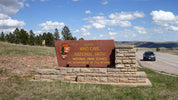
Backcountry Camping at Wind Cave National Park | Wild Prairie & Cave Country with LETWESAF
, by OFFICIALLETWESAF, 4 min reading time
, by OFFICIALLETWESAF, 4 min reading time
I scrapped leftover weekend household chores and hit the highway toward southern South Dakota, loading up all my rugged field gear alongside the LETWESAF camping perimeter alarm.
 I planned to spend multiple days dispersed backcountry camping amid Wind Cave National Park’s rolling grasslands and hidden underground cave networks.
 Nestled within the edge of Black Hills uplift zone, Wind Cave boasts one-of-a-kind mixed terrain unseen across other U.S. national park campgrounds.
Vast stretches of shortgrass prairie roll up and down in soft undulations, dotted with scattered pine groves and exposed limestone bedrock. Countless inconspicuous sinkholes and natural cave openings dot the grassy ground, leading deep into sprawling subsurface cave formations unique to this region.
After submitting paperwork and securing formal NPS backcountry authorization, I settled on an isolated off-grid campsite far away from crowded developed camp loops and visitor service hubs.
No fixed water spigots or restroom facilities exist nearby, meaning every drop of drinking water and daily provisions must be hauled over rough gravel routes from distant park supply depots.
Open grassland delivers harsh camping conditions few casual campers anticipate. Unfiltered midday sunshine covers the whole prairie with almost zero natural shade, triggering rapid physical dehydration even during slow camp setup work.
Chilled air constantly wells upward from underground cave passages once dusk settles in, driving overnight temperatures downward in a quick, unexpected shift.
Thick clusters of sagebrush sprawl across every section of open ground, forming countless hidden hiding spots for local wildlife. Moving across loose soil mixed with dry stalks also drains physical stamina far faster than hiking on compact woodland ground I’ve encountered elsewhere.
The uneven prairie terrain makes every step of gear transportation exhausting. Tall dry grass constantly tangles with hiking boots and backpack straps, slowing down camp setup progress and adding extra physical burden to all outdoor operations.
This completely undeveloped prairie wilderness offers zero man-made shelters or lighting. After dark, the entire landscape falls into absolute stillness, with no town glow or streetlights to dilute the pure wild atmosphere.
Unplanned nightly wildlife visits rank as the biggest recurring headache for anyone spending overnight stays on these open prairie grounds.
Official wildlife briefings released by local NPS management detail regular after-dark roaming from coyotes, striped skunks and ground squirrels across unmarked grassland stretches.
These animals slip easily through dense low shrubbery, and persistent prairie breeze effectively muffles their light footfall as they creep toward stored food near sleeping tents.
On my two prior solo camping runs here, I followed all official park food storage protocols and sealed every edible item inside airtight containers. Even with strict food containment measures in place, I stayed partially awake through most nights, frequently stepping outside tent fabric to scan surrounding shadowed grass and could never fully unwind at my campsite.
My overall overnight camping comfort improved drastically throughout this journey all thanks to LETWESAF. It functions reliably across bumpy grassy soil and scattered limestone fragments, sending out timely alert signals whenever curious wild animals drift close to my sleeping zone once night falls. Freed from draining round-the-clock watch duties, I built small regulated twig fires each evening and gazed up at unobstructed starscapes spanning the wide-open prairie sky, enjoying quiet relaxation missing entirely from my previous Wind Cave camping outings.
Over three full days wandering unmarked prairie footpaths and testing different campsite layouts near concealed cave entrances, I compiled three field-verified practical camping tips referencing seasonal meteorology reports issued by NWS South Dakota office.
First, ordinary metal tent stakes slide out easily from loose prairie loam. Collect rounded local limestone chunks and stack them along all tent perimeter edges to anchor fabric against sudden prairie wind surges.
Second, pack all aromatic toiletries and food goods inside certified wildlife-resistant sealed canisters and place these storage bins a minimum of fifty-five feet away from sleeping quarters to cut scent-driven wildlife attraction.
Third, never wander close to unmarked natural cave openings scattered across open grassland. Unauthorized cave exploration violates NPS resource protection rules, and loose unstable rock around cave mouths creates severe collapse risks for uninformed campers.
Following these straightforward field rules drastically cuts most avoidable camping mishaps within park borders.
As my multi-day outdoor excursion drew toward an end, I folded and sorted all camping gear neatly and took one long lingering glance across endless golden rolling prairie stretching toward cave-rich distant hills.
Exploring untamed grassland paired with rare underground cave landscapes stands as the core charm behind all outdoor and camping pursuits, and thoughtful pre-trip planning turns unpredictable prairie journeys into irreplaceable lifelong memories.


