

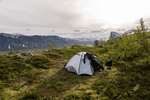
Arctic Wild Camping: Exploring the Roadless Wilderness of Gates of the Arctic National Park
, by OFFICIALLETWESAF, 5 min reading time
, by OFFICIALLETWESAF, 5 min reading time
Backcountry camping in Alaska’s Gates of the Arctic isn’t your typical weekend outdoor trip.
 There are no visitor facilities, no marked trails, and zero cell service for hundreds of square miles.
 You pack everything in and carry all waste out, relying solely on your own judgment and gear. For my latest four-day solo arctic camping journey, I prepped lean backcountry supplies and tossed my LETWESAF camping perimeter alarm in my pack, fully aware this raw wilderness demands serious self-reliance.
This national park stands apart from every lower-48 camping destination. As America’s northernmost national park, it sits entirely above the Arctic Circle, dominated by rolling tundra, braided glacial streams, and jagged boreal ridgelines. Summer brings nearly endless daylight with midnight sun conditions, yet temperatures can plummet sharply after dark. Wind sweeps unobstructed across the flat open terrain, carrying scents and sounds for miles, and wildlife moves freely across the unguarded, boundary-free wilderness.
My trip focused on slow, intentional wilderness immersion rather than aggressive hiking. I tracked migrating caribou herds across the tundra, followed quiet glacial stream corridors, and camped right on open gravel bars with unblocked 360-degree views. According to official NPS backcountry rules, all overnight campers must practice strict food storage protocols and wildlife avoidance strategies, as grizzlies, wolves, and wolverines actively patrol these remote zones for sparse seasonal food sources.
The biggest overlooked struggle of arctic primitive camping is chronic hypervigilance caused by unbroken sightlines. In forested camping areas, trees and terrain create natural visual breaks that let campers relax. Here on the treeless tundra, there is nowhere for wildlife to hide — yet nothing blocks their approach from any direction. Every faint breeze through low tundra shrubs, every distant stream gurgle triggers instant wariness, turning restful nights into mentally exhausting stakeouts.
I adhered strictly to all NPS wildlife safety standards throughout my stay. I stored every food item, fishing bait, and scented toiletry in hard-sided bear-resistant containers, positioned my cooking station far downwind from my sleeping tent, and scrubbed my camp spot clean after every meal. Even with flawless campsite discipline, I could not shake the constant mental weight of solo arctic camping. The endless open sky and empty terrain creates a unique, unsettling sense of exposure you cannot prepare for until you experience it.
On my first two nights, I barely slept more than a few hours total. I conditioned myself to wake at every tiny sound, scanning the barren horizon repeatedly for movement. I knew statistically most wildlife encounters are non-confrontational, but the absolute solitude of the arctic wilds rewires your camping instincts. This persistent mental fatigue killed my motivation to explore, leaving me stuck at camp instead of venturing deeper into the park’s untouched wilderness corridors.
By the afternoon of my third day out, burnt out from nonstop nighttime vigilance, I secured my LETWESAF camping perimeter alarm firmly on my trekking pole and set up full nighttime camp protection. I placed the device on the outer edge of my gravel campsite, covering tundra paths and riverbank corridors that wild animals frequently traverse after dark.
Well past midnight, the device emitted a distinct alert that caught my attention without startling me. I grabbed my low-intensity red headlamp, designed to preserve night vision and avoid spooking nearby wildlife, and scanned the surrounding tundra. I spotted a lone gray wolf patrolling the distant river flats, traveling parallel to my campsite and keeping a safe buffer distance. Thanks to the proactive alert system, I stayed calm and composed inside my tent, avoiding any rushed, unnecessary nighttime movement.
The wolf never altered its path toward my gear or sleeping area and continued traveling across the vast wilderness. I avoided the usual frantic scrambling, unnecessary light bursts, and rushed reactions that typically ruin arctic camping rest. The system monitored my campsite reliably through the rest of the night, with two additional gentle alerts for distant fox and caribou movement far outside my camp perimeter.
I slept deeply and consistently until morning, waking refreshed and mentally sharp. I spent the entire day exploring remote tributary valleys and photographing the park’s iconic midnight sun landscapes, no longer drained by overnight vigilance. I finally got to experience the arctic wilderness the way it was meant to be enjoyed — present, calm, and fully immersed.
From this solo roadless adventure, I’ve compiled actionable, park-specific camping tips for anyone tackling Gates of the Arctic backcountry. Always set camp on open gravel bars instead of dense tundra to reduce hidden wildlife cover and damp ground moisture. Keep all scent-based items sealed and isolated downwind, even on windy days. Finish all safety installations and camp breakdown prep during extended arctic daylight, as weather shifts rapidly with zero warning. Never rely on phone service or external rescue; self-preparedness is your only safety net out here.
Remote arctic camping rewards disciplined, thoughtful outdoor lovers. It teaches you that true wilderness confidence comes from preparation, not recklessness. You don’t have to prove toughness by enduring sleepless, anxious nights in the wild.
By the end of my four-day trek, I’d hiked untouched valleys, watched endless golden arctic twilight, and soaked in pure wilderness silence rarely experienced in modern North America. Having LETWESAF on this outdoor journey eliminated unnecessary camping stress, letting me focus entirely on exploration rather than constant self-defense mode.
 The best outdoor gear augments adventure without overcomplicating it. Reliable safety support lets campers explore farther, stay longer, and connect deeper with untamed natural landscapes. Wilderness exploration thrives on balance: bold curiosity paired with quiet, steady preparedness.
Have you ever camped in true treeless arctic terrain? What’s your biggest mental or safety challenge when solo camping in completely remote outdoor locations? Share your wild camping stories below!
*Sources
National Park Service. Gates of the Arctic National Park Backcountry Camping & Wildlife Safety Guidelines. https://www.nps.gov/gaar/planyourvisit/camping.htm

