

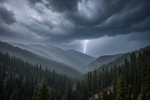
What Hazardous Terrain Campers Must Avoid In Thunderstorms | LETWESAF Camping Safety Tips
, by OFFICIALLETWESAF, 6 min reading time
, by OFFICIALLETWESAF, 6 min reading time
Lightning remains one of the most underestimated natural hazards for wilderness travelers across the United States. Compiled NOAA meteorological data records 21 lightning-related fatalities in 2025, hitting the highest mortality figure within six years. Meteorologists confirm thunderstorm activity will grow more intense in 2026, with an average of 444 Americans suffering lightning-induced injuries annually. Most outdoor casualties stem from a universal cognitive fallacy. Countlessoutdoor campers choose ridges, summits and solitary trees for shelter during sudden storms. These seemingly safe shelters turn into deadly traps, making terrain selection the top priority for thunderstormcamping protection.
Complete wilderness protection combines terrain awareness and campsite monitoring. Seasoned outdoor enthusiasts prioritize dual-dimensional safety arrangements for every remote campsite. The compact LETWESAF Portable Radar Perimeter serves as a practical camping perimeter alarm for long-distance wilderness stays.
The Science Behind Lightning Terrain Risks
Lightning seeks the shortest conductive path toward the ground. Mountain summits and exposed ridges stand above surrounding landscapes and easily attract atmospheric electrical charges. Isolated single trees function as natural lightning rods in open flat areas. Electric current spreads outward across soil surfaces after ground strikes. Step voltage forms invisible danger zones that threaten anyone standing nearby. Low-lying clustered woodland zones feature weaker electric conductivity and deliver stable natural protection.
Four High-Risk Camping Terrain Types
Risk Cause: Open high ground lacks surrounding shielding vegetation. Wind acceleration and charge accumulation raise lightning strike probabilities. Elevated terrain shortens the distance between the ground and thunderclouds, increasing electrical induction risks.
Real Camping Scenario: Many casual campers select mountain ridges for panoramic views and unobstructed ventilation. A small hiking group set up lightweight tents on an open ridge in early spring. Sudden thunderstorms rolled in at dusk, and the exposed high terrain triggered obvious static sensation on human skin.
Prevention Methods: Permanently abandon ridge and summit camping during thunderstorm seasons. Prioritize low-lying terrain surrounded by dense trees. Observe cloud movement and wind direction to evacuate high ground in advance.
Emergency Solution: Once thunder sounds appear, leave high ground quickly. Keep the body in a low crouched posture and avoid lying flat. Disperse team members to reduce group exposure risks.
Risk Cause: Lone trees dominate flat grasslands and wilderness clearings. Trunk moisture and internal fiber enhance electrical conductivity. Isolated tall trees become prime lightning attraction points in open spaces.
Real Camping Scenario: Individual campers often take shelter under single broadleaf trees to escape sudden rain. A wilderness traveler placed camping gear beside an isolated oak tree. Hidden static charges accumulated around the trunk before lightning struck nearby vegetation.
Prevention Methods: Never take shelter under any solitary tree. Keep a safe distance of more than 15 meters from independent tall plants. Choose clustered woods for temporary rest zones.
Emergency Solution: Move away from tree trunks immediately when storms approach. Avoid touching tree bark and wet branches. Stay in open flat ground far from isolated vegetation.
Risk Cause: Water surfaces conduct electricity efficiently. Lakeside and riverbank campsite locations amplify lightning hazard ranges. Damp soil around shorelines extends the effective radius of ground current diffusion.
Real Camping Scenario: Recreational campers prefer waterfront locations for beautiful scenery and convenient water access. A family camping group built camps near a calm lake. The humid shore soil continuously accumulated static electricity during distant thunder activity.
Prevention Methods: Avoid waterfront camping in thunder-prone seasons. Maintain at least 20 meters of safe distance from all water bodies. Select dry and well-drained soil for tent placement.
Emergency Solution: Abandon lakeside and riverside zones at the first sign of thunder. Stay away from wet mud and water edges. Transfer to higher dry flat ground for temporary avoidance.
4. Metal-Backed Open Clearings
Risk Cause: Exposed metal camping equipment collects static charges. Uncovered tent frames and metal camping furniture subtly increase surrounding electrical sensitivity during storm cycles. Metal products accelerate charge conduction in open spaces.
Real Camping Scenario: Most campers leave metal tent poles and iron brackets exposed during outdoor stays. A multi-day camping team kept metal tables and brackets in open clearings. These metal items continuously induced faint electric currents on stormy afternoons.
Prevention Methods: Dismantle exposed metal equipment before bad weather. Wrap metal brackets with insulating cloth. Keep metal camping supplies inside sealed tents during thunderstorms.
Emergency Solution: Do not directly touch any bare metal facilities. Isolate metal equipment from human activity areas. Stay in non-metal rest spaces until thunderstorms completely pass.
Observable Pre-Storm Judgment Rules
Simple natural indicators help campers predict approaching thunderstorms. Gradually darkening cloud layers and continuous low-frequency thunder signal developing storm systems. Sudden temperature drops and abrupt wind shifts mark incoming cold convection airflow. Skin static tingling and standing hair serve as direct pre-lightning physical signals. Early evacuation to safe terrain effectively reduces outdoor exposure risks.
Standard Emergency Response Procedures
Campers must abandon high ground once thunder echoes within ten miles. All individuals should stay away from tree trunks, water bodies and metal facilities. Bending into a low crouched posture minimizes physical contact area with the ground. Group members maintain scattered spacing to avoid collective current impact. Strict avoidance of horizontal lying positions reduces step voltage influence.
Group Camping First Aid Guidelines
Unconscious lightning victims require timely emergency assistance. Rescuers conduct contact checks and artificial respiration without delay. Dry blankets maintain body temperature for shocked individuals. Rapid evacuation to open flat terrain ensures unobstructed professional rescue access. Daily emergency drills improve response efficiency for unexpected outdoor incidents.
Printable Lightning Safety Checklist & Decision Tree
✅ Avoid ridges, summits and isolated trees during storm seasons
✅ Relocate to low-lying dense woodland at the first thunder sound
✅ Keep twenty meters away from all water bodies while storming
✅ Dismantle exposed metal camping frames ahead of bad weather
✅ Deploy sensitive motion sensor devices for continuous campsite monitoring
Terrain selection is the core of lightning prevention strategies, and scientific weather forecasting further enhances the safety and stability of wilderness camping.
Every wilderness exploration relies on rational judgment and adequate preparedness. Terrain awareness and standardized emergency habits reduce unnecessary outdoor risks. Simple safety principles protect campers from unpredictable natural weather. Meticulous pre-trip planning supports every bold step into the wild. Steady preparation allows explorers to embrace natural scenery with calm and confidence.
· National Oceanic and Atmospheric Administration (NOAA): https://www.noaa.gov/news

