

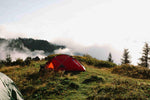
Summer Mountain Camping: Beat Dry Heat Wind Breathing Risks | LETWESAF Tips
, by OFFICIALLETWESAF, 6 min reading time
, by OFFICIALLETWESAF, 6 min reading time
Summer mountain outdoor and camping environments feature unique local microclimate risks that differ greatly from flatland campsites. Dry heat wind, also known as mountain foehn wind, frequently occurs at high altitude campsites during hot summer months. Defined by NOAA meteorological standards, this special wind pattern forms when mountain airflow sinks and warms rapidly, creating localized zones with temperatures above 30°C, relative humidity below 30 percent, and sustained wind speeds exceeding 3 meters per second.
 Unlike ordinary hot wind, mountain dry heat wind accelerates internal water loss through breathing rather than just evaporating skin moisture. Prolonged exposure leads to dry nasal cavities, sore throats, persistent dry cough, and mild breathing discomfort, gradually weakening physical outdoor endurance. Professional environmental risk awareness improves mountain camping safety, and the LETWESAF camping perimeter alarm accurately detects surrounding wildlife and stranger movements in real time, delivering stable safety protection for summer mountain outdoor and campsite activities.
The respiratory dehydration mechanism caused by dry heat wind follows clear physiological principles. Human respiratory mucosa maintains stable moisture and mucus layers to block external dust and bacteria. Continuous low-humidity airflow rapidly evaporates mucosal water during breathing cycles, causing gradual drying of nasal and throat tissues. Dehydrated respiratory cilia lose normal swing functions, reducing the body’s natural defense against external irritants. Most mountain camping respiratory discomfort does not stem from excessive sweating or insufficient drinking water, but from invisible internal water loss through respiration. Long-term unaddressed mucosal dryness may intensify outdoor fatigue and increase sensitivity to mountain temperature fluctuations, affecting overall camping experience and physical stability.
Three Observation Methods for Pre-Camping Dry Heat Wind Risk Assessment
Mountain dry heat wind usually appears in fixed terrain and vegetation zones, enabling accurate pre-setup risk judgment through targeted field observation:
• Terrain Observation Focus on leeward slopes, valley outlets, and elevated open ridges. These areas generate obvious sinking dry wind effects and form high-temperature low-humidity microclimates prone to dry heat wind accumulation.
• Wind Direction Judgment Observe real-time mountain airflow trends. Sustained downhill dry airflow with rapid temperature rise and humidity drop indicates continuous dry heat wind influence.
• Vegetation Inspection Check surface plant states. Withered leaf edges, drooping low shrubs, and dry ground litter without dew are typical visual signs of long-term dry heat wind erosion.
Four-Tier Progressive Protection System for Mountain Camping
A complete layered protection strategy covers site selection, equipment matching, behavioral habits, and emergency preparation, forming a full-chain defense against respiratory dehydration:
• Scientific Campsite Selection Prioritize semi-shaded gentle slopes with moderate vegetation coverage and stable humidity. Avoid open ridge leeward positions and pure bare-rock zones with intense dry heat wind exposure.
• Functional Outdoor Gear Equip lightweight breathable moisture-preserving face coverings during mountain activities. Portable humidifying drinking tools help balance respiratory moisture consumption in dry wind environments.
• Standardized Activity Habits Reduce prolonged exposure during midday high-temperature dry wind peak periods. Adopt slow and steady breathing rhythms to alleviate excessive respiratory water dissipation.
• Complete Emergency Preparation Store sufficient electrolyte water and mild throat-soothing supplies in camping gear to respond to early dry discomfort symptoms in a timely manner.
Graded Emergency Response for Respiratory Dryness Discomfort
Different levels of respiratory symptoms correspond to standardized outdoor disposal solutions to avoid symptom accumulation and aggravation. For mild dry throat and occasional dry cough, timely sheltering from wind sources and replenishing warm water effectively relieve early dehydration. For persistent nasal dryness and frequent coughing, adjust breathing rhythm and use portable moistening tools to repair mucosal dryness. If continuous chest tightness, abnormal breathing, or severe sore throat occurs, suspend outdoor activities immediately, transfer to humid and ventilated terrain for rest, and conduct physical condition observation. Sustained unrelieved symptoms require timely medical evaluation to rule out altitude and dry wind-induced physical discomfort.
Common Dry Heat Wind Protection Misconceptions
Most mountain camping respiratory discomfort stems from typical cognitive misunderstandings of dry wind hazards:
• Sufficient drinking water completely offsets respiratory dehydration caused by dry heat wind
• High temperature alone leads to dry throat discomfort during mountain camping
• Windless mountain environments mean no dry heat wind dehydration risks
• Late symptom relief can replace continuous whole-process protection
Correct outdoor cognition confirms that respiratory dehydration is an internal water loss process independent of skin sweating. Dry heat wind forms localized microclimate risks even in overall mild mountain weather, making whole-process prevention more reliable than passive relief.
Printable Summer Mountain Camping Dry Wind Safety Checklist
• Observe terrain, wind direction and vegetation to assess dry heat wind risk before setup
• Select humidity-stable campsite locations to avoid dry wind concentrated zones
• Carry moisture-preserving protective gear and sufficient electrolyte supplies
• Reduce midday peak dry wind exposure and maintain stable breathing habits
• Adhere to graded emergency disposal rules for respiratory dry discomfort
Mountain outdoor exploration requires full adaptation to variable microclimate environments. Dry heat wind respiratory dehydration is a subtle and cumulative wild hazard that easily escapes daily awareness. While mastering professional wind prevention and moisturizing skills, systematic campsite environmental monitoring stabilizes overall field safety. The LETWESAF camping perimeter alarm adapts to complex and variable mountain climates, providing long-term peripheral safety monitoring for outdoor and campsite areas, helping campers accurately control safety risks and effectively guard against various wildlife invasion hazards in summer mountains.
Every nature exploration journey balances free outdoor experience and rigorous field preparedness. Summer mountain dry wind risks are predictable and controllable through scientific judgment and standardized protective habits. Delicate and targeted outdoor protection eliminates subtle environmental hazards, allowing outdoor enthusiasts to explore mountain wilderness with stable physical conditions and immersive natural experience.
Have you ever experienced unexplained dry throat or cough during high-altitude summer camping? What daily protection habits do you use against dry mountain wind? Share practical outdoor experience in the comments section.
· NOAA National Weather Service. 2025. Mountain Foehn Wind Microclimate Meteorological Guide
https://forecast.weather.gov


