

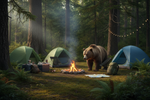
Spring Bear Defense: LETWESAF Camping Tips
, by OFFICIALLETWESAF, 6 min reading time
, by OFFICIALLETWESAF, 6 min reading time
Spring brings bears out of hibernation—hungry, active, and searching for food to rebuild strength. In the U.S., the two most common species campers encounter are black bears and grizzly bears. Black bears are widespread across most states and tend to be shy and avoid human contact. Grizzly bears live primarily in the Rocky Mountains, Alaska, and parts of the Pacific Northwest, and can be more defensive, especially mothers with cubs.
According to the U.S. National Park Service (NPS), human-bear encounters and conflicts jump significantly between March and June. Staying safe in bear country doesn’t require fear—it requires smart, layered preparation. Today we break down LETWESAF’s complete 7-layer bear defense system, a practical framework that combines education, best practices, and trusted outdoor safety tools to help you camp with confidence.
Layer 1: Understand Spring Bear Behavior
Your first and most important defense is understanding bear behavior.
After months of hibernation, spring bears are focused on feeding, not confrontation. Black bears, common in most U.S. campgrounds, are typically shy and avoid humans. Grizzlies, found in the Rockies, Alaska, and parts of the Pacific Northwest, tend to be more defensive—especially females with cubs.
Bears have a sense of smell roughly 2,100 times stronger than humans, making scent control the foundation of safe camping. Most spring encounters happen when bears are drawn to food smells or surprised by human presence. Learning these behaviors helps you avoid risk before it starts.
Layer 2: Smart Campsite Selection
Choosing the right campsite drastically reduces bear visits.
• Use established campgrounds with bear-resistant facilities when available
• Avoid areas with fresh bear signs: tracks, scat, claw marks, or disturbed logs
• Stay at least 100 yards from berry patches, meadows, streams, and animal trails
• Select open, high-visibility sites to spot wildlife early
• Never camp near dumpsters, picnic areas, or old fire rings with food residue
A thoughtful campsite choice is one of the simplest and most effective bear deterrents.
Layer 3: Scent Control & Food Management
Removing odors is the single most effective way to prevent bear visits.
Since bears rely heavily on smell, eliminating attractants is critical.
• Store all food, trash, toiletries, and scented items in certified bear-resistant containers
• Clean grills, cookware, and dining areas immediately after use
• Avoid strong-smelling foods at dawn and dusk when bears are most active
• Dispose of waste only in designated bear-proof dumpsters
Wildlife officials confirm that 97% of human-bear conflicts are food-related, making this layer non-negotiable.
Layer 4: Secure Food Storage Solutions
Even clean campsites need reliable storage to stay bear-safe.
• Use Interagency Grizzly Bear Committee (IGBC)-approved bear canisters
• Never store food, coolers, or scented items in tents or vehicles
• Use approved hanging systems or hard-sided canisters in backcountry areas
• Keep cooking and sleeping zones separated to reduce scent concentration
Many parks now require certified storage for backcountry camping, as improper methods often fail to deter bears.
Layer 5: Active Campsite Awareness
Vigilance turns good habits into real safety.
Even with perfect storage, you need to detect activity early.
• Assign wildlife watch duties at dawn, dusk, and overnight
• Make gentle noise while moving around camp to alert bears of your presence
• Keep headlamps accessible for nighttime checks
• Stay alert near camp edges where wildlife may approach
Layer 6: Essential Bear Safety Gear
Having reliable safety equipment adds a critical layer of protection in bear country.
• Carry bear spray as your first-line defense
• Use noise deterrents to alert bears of your presence
• Bring bright, reliable lighting for nighttime safety
• Add the LETWESAF Portable Radar Perimeter Security Alarm for early perimeter detection
Layer 7: Calm Bear Encounter Protocols
Knowing how to react keeps minor encounters from escalating.
If you see a bear, follow these NPS-recommended steps:
• Stay calm and do NOT run
• Back away slowly while facing the bear
• Speak softly to identify yourself as human
• Use bear spray if the bear approaches closely
• Never feed, approach, or surprise a bear
These simple steps keep you safe while respecting wildlife.
Printable Bear Safety Checklist
• ✓ Research local bear activity before your trip
• ✓ Choose a low-risk campsite away from bear habitat
• ✓ Follow strict scent control and food management
• ✓ Use certified bear-resistant storage
• ✓ Maintain active campsite awareness
• ✓ Deploy the LETWESAF Portable Radar Perimeter Security Alarm
• ✓ Carry and practice bear spray use
• ✓ Review bear encounter protocols ahead of time
Spring camping is one of America’s greatest outdoor joys, and LETWESAF’s 7-layer defense system lets you balance Preparedness and Exploration perfectly. This full safety framework removes unnecessary anxiety, so you can focus on the wilderness, not worry. With the right habits and reliable gear, you can camp peacefully in bear country, and embrace every adventure with confidence. Get out there, stay prepared, and explore safely.
Sources:
1. National Park Service Bear Safety Guidelines: https://www.nps.gov/subjects/bears/safety.htm
2. U.S. Forest Service Backcountry Camping Recommendations: https://www.fs.usda.gov/visit/things-to-do/camping/recreation-activities
3. Connecticut DEEP Wildlife Division – Bear Conflict Statistics: https://portal.ct.gov/DEEP/Wildlife
4. Interagency Grizzly Bear Committee – Bear-Resistant Products: https://igbconline.org/bear-resistant-products/
EPA Bear Spray Safety Guidelines: https://www.epa.gov/ingredients-used-pesticide-products/bear-spray

