

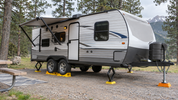
Off-Road Trailer Camping: 8 Things to Check Before and During Your Trip
, by OFFICIALLETWESAF, 6 min reading time
, by OFFICIALLETWESAF, 6 min reading time
An off-road trailer can make remote camping much more comfortable, but towing and setting up camp in unfamiliar terrain comes with a few extra responsibilities. You need to think about the vehicle, the trailer, the equipment inside it, and the space around your campsite.
The good news is that many common problems can be avoided with a few simple checks. Whether you're heading out for a weekend or planning a longer trip, these eight tips can help you get more out of your next adventure.
Before every trip, take a few minutes to inspect the trailer. Check the tires, wheel condition, lights, electrical connections, hitch, safety chains, and breakaway system if equipped.
Make sure the coupling is properly secured and that the trailer is compatible with your tow vehicle's rated towing and payload limits. If your trailer has been sitting unused for a while, give it a more thorough inspection before heading onto rough roads.
It is much easier to discover a problem in your driveway than halfway through a remote trail.
Packing a trailer isn't just about fitting everything inside. How you distribute the weight can affect towing stability and handling.
Follow your trailer manufacturer's loading guidance and stay within its gross vehicle and axle weight ratings. Keep heavy items secured and positioned as recommended, and avoid placing too much weight at the rear. Make sure drawers, storage boxes, and loose equipment cannot move around when traveling over uneven ground.
A well-loaded trailer is easier to manage and helps make the drive more predictable.
Not every off-road route is suitable for every trailer. Before setting off, consider the trailer's ground clearance, width, overall length, turning radius, and approach and departure angles.
Tight switchbacks, deep ruts, steep inclines, and narrow tracks can be much more challenging when towing. Check route information in advance and don't assume that a trail suitable for your 4x4 is automatically suitable for your trailer.
If a section looks too difficult, stopping to assess the situation or choosing an alternative route is often the smarter decision.
Once you arrive, look for a location with firm ground and enough room to position the trailer. Ideally, the area should allow you to open doors, extend an awning, access storage, and move around without blocking the path.
Check the slope and drainage before unhitching. Use suitable leveling equipment and stabilizers according to the trailer manufacturer's instructions. Avoid placing stabilizers on soft or unstable ground without appropriate support.
 A few minutes spent choosing the right spot can save a lot of adjustment later.
A trailer gives you useful storage, but your campsite will probably still include equipment outside. You may have chairs, cooking supplies, tools, recovery boards, or outdoor storage boxes arranged around the vehicle.
Try to keep different activities in separate areas. Place cooking equipment where it can be used safely, keep frequently used items accessible, and avoid leaving tools or loose accessories in walkways.
If you're camping with other people, agree on where shared equipment will go. A tidy campsite is easier to use and much quicker to pack up.
Once everyone has settled in for the night, it may be harder to notice movement around the outside of your trailer. This can matter when you have outdoor equipment or personal belongings stored around the campsite.
Some campers consider camping alarms as an additional way to stay aware of activity in selected areas.
The Camping Radar Security Alarm System from letwesaf uses radar-based motion detection to monitor a chosen outdoor area. It can alert you when movement is detected within its coverage zone, making it useful for a selected approach path or an area where you keep outdoor equipment.
The letwesaf radar motion alarm system does not depend on a mobile app or internet connection for detection. This can be helpful when camping in remote locations with limited connectivity.
For the best practical setup, consider the layout of your trailer and campsite before positioning the sensor. It monitors a selected detection area, not every part of the campsite, and it does not identify people. It should be used alongside sensible equipment storage and other normal campsite precautions.
When the weather changes or you need something after dark, you don't want to search through every storage compartment.
Keep a small group of nighttime essentials easy to reach. This might include a flashlight or headlamp, warm clothing, drinking water, basic first-aid supplies, and any equipment you regularly use before sleeping.
Check your trailer's interior and exterior lighting before departure. If you use an awning, make sure it is properly secured when conditions become windy. Having a simple nighttime routine makes it easier to settle in and prepare for the next morning.
After a few days outdoors, it's easy to overlook small details when packing up. Before leaving, walk around the trailer and check that storage compartments are closed, doors are secured, external accessories are packed away, and the hitch is correctly connected.
Check tire condition and pressure, lights, safety chains, and electrical connections. Make sure the load is secure and that nothing has been left behind at the campsite.
Finally, collect all rubbish and follow local rules for waste disposal and campfires. Leaving the area clean is part of being a responsible off-road traveler.
The best off-road trailer setup is not necessarily the one with the most equipment. It's the one that suits your vehicle, your travel style, and the places you want to explore.
A few checks before departure, sensible weight distribution, a well-planned campsite, and a practical nighttime routine can make a big difference. If you want to add another detection option around camp, the letwesaf wireless radar motion alarm is worth considering as part of your outdoor equipment.
Prepare your trailer, organize your campsite, and enjoy the freedom of exploring beyond the pavement.


