

Leaving Your RV at a Remote Campsite? What to Do Before You Head Out
, by OFFICIALLETWESAF, 6 min reading time
, by OFFICIALLETWESAF, 6 min reading time
One of the best parts of remote camping is being able to leave your campsite for a while.
You park the RV, set up camp, and then head out for the day.
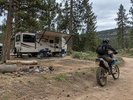
Maybe you're taking the dirt bike down a nearby trail. Maybe you're going hiking, fishing, exploring an off-road route, or simply driving farther into the backcountry to see what's around the next bend.
The problem is that your campsite doesn't leave with you.
Your RV, food, chairs, cooking gear, tools, and everything else you brought for the trip are still sitting there.
That doesn't mean you should spend the whole day worrying about camp. It just means a remote campsite deserves a little preparation before you walk away from it.

Before worrying about equipment, take a good look at where you've parked.
Is the RV on stable ground? Is there a large dead branch hanging over the site? Is the access road likely to become difficult if the weather changes? Is the campsite positioned somewhere that could be affected by runoff or other environmental hazards?
The National Park Service recommends looking at site conditions, weather, hazards, and accessibility before committing to a campsite, and recommends having a backup plan when conditions change.
For RV camping, this matters even more because you're dealing with a much larger and heavier setup than someone sleeping in a tent.
If you're already thinking about how you're going to get out before you even finish parking, that's probably a good thing.
The next step is the obvious one, but it is also one of the easiest to overlook when you're in a hurry to start exploring.
Food.
Before leaving camp, take another look at anything that smells like food.
Coolers. Snacks. Cooking equipment. Trash. Food packaging. Even some toiletries and scented products can attract wildlife in certain areas.
The National Park Service specifically recommends securing food, cleaning up scraps and packaging, and following local food-storage requirements.
The exact rules depend on where you're camping.
In some places, a hard-sided RV can be an appropriate place to store food when doors, windows, and vents are closed. Yosemite, for example, allows food to be stored out of sight in hard-sided RVs and trailers under those conditions, while soft-sided campers have different requirements.
That's a good reminder that “it's inside the RV” isn't automatically the answer everywhere.
Check the local rules first.
When people hear “remote campsite,” it's easy to imagine that you need a huge collection of security equipment.
You don't.
The better approach is to give every piece of gear a specific job.
Your RV keeps you protected from the weather.
Your locks and normal vehicle precautions help secure the vehicle.
Proper food storage reduces wildlife attraction.
Good trip planning helps you deal with weather, road conditions, and unexpected problems.
And if you want an additional layer of awareness around the campsite, that's where a camping perimeter alarm can fit into the setup.
Before heading out for the day, I like to place the LETWESAF camping perimeter alarm around the areas I want to monitor.
The point isn't to turn the campsite into a security zone.
It's simply to know when there is movement around the monitored area.
That's particularly useful for the kind of outdoor adventure where you may spend the afternoon away from camp and return later.
This is the part that's easy to skip.
Most people prepare for what they're going to do during the day, but not necessarily for what the campsite will look like while they're away.
So before leaving, take a quick walk around.
Are the chairs secured?
Is anything likely to blow away?
Is food stored properly?
Are tools and valuable equipment put away?
Are the RV doors and windows secured?
Did you leave anything on the ground that shouldn't be there?
It sounds almost too simple, but a five-minute check can save you from returning to a campsite that looks very different from the one you left.
And if you're camping on public land, remember that rules for dispersed camping vary by location. BLM guidance, for example, says dispersed camping is generally allowed on many public lands but that visitors must follow local restrictions, stay on designated roads where required, and check area-specific rules before traveling.
Remote doesn't mean unrestricted.
There is another reason to keep the campsite organized when you leave: you may be coming back to it later.
This matters on longer overlanding trips, especially when the campsite is your base for several days.
A clean site is easier to manage.
Food is easier to track.
Gear is easier to find.
And you're less likely to forget something when it's time to move on.
Wildlife is another reason to keep things clean. Canyonlands National Park notes that animals can repeatedly return to backcountry campsites where they have previously found food, and emphasizes keeping food, trash, and scented items secured.
So don't think of cleaning up as something you do only before driving home.
It is part of setting up camp in the first place.
Once you've done the basic checks, leave camp.
That's the whole point.
Take the dirt bike.
Drive the off-road route.
Go fishing.
Hike the trail.
Find the next overlook.
Or spend the afternoon exploring somewhere you've never been before.
Remote camping works best when the campsite is your base rather than the thing you spend the entire day worrying about.
The goal isn't to eliminate every possible problem. That's impossible outdoors.
The goal is to prepare for the predictable ones, follow the rules for the area you're visiting, and use your equipment for the job it was designed to do.
A little preparation before you leave can make the rest of the day much easier.
And when you come back to camp later, your RV is still where you left it, your gear is organized, your food is secured, and you know what's happening around your campsite.
That's a pretty good setup for another night outside.


