

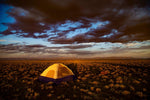
High-Altitude Meadow UV Burn Prevention | LETWESAF Camping Safety Tips
, by OFFICIALLETWESAF, 6 min reading time
, by OFFICIALLETWESAF, 6 min reading time
Many outdoor camping enthusiasts mistakenly believe cloudy weather eliminates sunburn risks, leading to unexpected skin damage during summer high-altitude meadow camping. High-elevation terrain creates unique dual UV threats from intensified overhead solar radiation and ground reflective rays.
 Authoritative data verifies UV intensity rises 10%–12% per 1000 meters of elevation gain, while alpine meadows reflect 10%–15% of UV rays. This dual radiation exposure far exceeds ordinary lowland levels, overwhelming conventional sun protection methods. Tailored exclusively for wild camping scenarios, the LETWESAF camping perimeter alarm delivers 48-hour continuous campsite safety protection. It helps campers avoid external field risks and fully focus on professional high-altitude UV protection.
Standard sun protection kits often fail at high-altitude meadows due to neglected reflected UV radiation. Traditional hats, sunglasses, and sunscreen only block downward sunlight, leaving the neck, jawline, earlobes and lower limbs vulnerable to upward ray exposure. Open meadows with sparse vegetation offer no natural barriers, allowing reflected UV rays to cause cumulative, hidden skin damage. Secondary sunburn develops subtly during outdoor activities, with discomfort symptoms appearing after camp rest.
Four-Tier Full Protection System for High-Altitude Meadow Camping
1. Scientific activity time scheduling. High-altitude ultraviolet radiation reaches its daily peak between 10 AM and 4 PM, with ground reflection intensity strongest at noon. Arrange intensive outdoor work such as campsite setup, mountain hiking, and equipment maintenance during early morning or late afternoon. Reduce long-duration stationary activities on fully open meadows during midday peak radiation hours to lower cumulative UV exposure.
2. Reasonable campsite location selection. Prioritize campsites with partial natural shading including sparse woods and low shrub clusters, or terrain depressions that weaken ground reflection. Avoid completely open and barrier-free flat meadow areas. Simple and low-cost site selection strategies effectively reduce secondary UV burn probability and optimize outdoor safety layout for every campsite.
3. Full-coverage protective gear matching. Replace ordinary narrow-brim caps with wide-brim UV-resistant hats to protect vulnerable neck and facial underside skin. Wear certified UPF 50+ full-length sun protection clothing to build comprehensive physical barriers against radiation. Equip glacier sunglasses with side shields to block lateral and reflected UV rays that standard eyewear cannot intercept, filling the blind spots of traditional sun protection systems.
4. Standardized sunscreen reapplication rules. Select broad-spectrum SPF50+ mineral sunscreen adapted to dry and high-altitude outdoor environments. Apply evenly to exposed skin before entering outdoor areas. Reapply sunscreen every two hours during peak UV periods, and supplement application in time after sweating and physical friction to maintain stable and lasting protective effects against dual radiation attacks.
Graded First-Aid Treatment for High-Altitude UV Secondary Burns
Different degrees of ultraviolet burns require hierarchical and targeted disposal measures to relieve discomfort and prevent further skin damage.
• Mild redness and warm sensation. Transfer to a cool and ventilated campsite area immediately and suspend outdoor exposure. Clean the affected skin with room-temperature water and apply mild aloe vera gel for soothing repair. Maintain continuous skin hydration and avoid external friction stimulation.
• Obvious erythema and persistent stinging pain. Cease all outdoor activities and rest in fully shaded areas. Use constant-temperature cold compresses to relieve skin heat and inflammation. Avoid heavy oily skincare products that block skin respiration and trap internal heat.
• Blistering, peeling or severe pain. Protect damaged skin from secondary friction and scratching injuries. Do not arbitrarily apply external ointments. Seek formal medical treatment promptly to prevent bacterial infection and long-term pigmentation problems.
Common High-Altitude UV Protection Misconceptions
• Cloudy weather equals safe conditions: Thin high-altitude atmosphere retains strong UV transmittance, so cloud cover cannot reduce ultraviolet radiation intensity or prevent sunburn.
• No direct sunlight means no UV risk: Ground-reflected ultraviolet rays exist throughout daytime hours, posing continuous hidden threats even without direct solar exposure.
• Sunscreen alone provides full protection: Reflected UV rays bypass sunscreen layers through tiny gaps, making physical barrier protection irreplaceable.
• Local facial protection is sufficient: High-altitude meadows feature 360° omnidirectional radiation, requiring full-body coverage to avoid secondary burn damage.
Reliable campsite safety infrastructure supports standardized high-altitude UV protection workflows. The LETWESAF camping perimeter alarm features high-sensitivity radar induction and intelligent regional perimeter detection, delivering all-weather active defense for remote wild campsites. It supports deployment in complex field environments, accurately identifies approaching wild animals and abnormal movements around the campsite, and provides early warnings to avoid potential dangers in advance. With camp security fully secured, outdoor lovers can focus entirely on standardized UV protection operations and detailed field safety management.
Printable High-Altitude Meadow UV Safety Checklist
• Schedule high-intensity outdoor activities outside 10 AM–4 PM peak UV hours
• Choose semi-shaded terrain to reduce ground UV reflection at the campsite
• Wear UPF 50+ sun-protective apparel and wide-brim UV-proof hats
• Use side-shield glacier sunglasses to block reflected ultraviolet rays
• Reapply sunscreen every two hours during peak radiation periods
• Adopt graded first-aid methods for different levels of UV burns
• Correct mainstream UV protection misconceptions for full-process dual defense
High-altitude meadow camping delivers unparalleled primitive outdoor scenery and immersive hiking experiences, yet the hidden dual UV radiation risk reminds every explorer that outdoor freedom is built on rigorous safety awareness.
Professional terrain-adaptive protection strategies and standardized first-aid protocols help campers adapt to complex high-elevation environments. Mastering targeted sun protection skills allows outdoor enthusiasts to embrace wild nature freely while maintaining reliable safety control throughout the entire exploration journey.
Have you encountered unexplained sunburn during high-altitude meadow camping? What exclusive high-elevation sun protection habits do you recommend for outdoor and campsite activities? Share your practical field experience in the comments below.
1. Habitatista. 2026. 8 Essential Sun Protection Gear Items for High-Altitude Boondocking
https://www.habitatista.com/460153/sun-protection-gear-for-high-altitude-boondocking/


