

Beginner-Friendly Campfire Tricks for Risk-Free Summer Camping | LETWESAF Tips
, by OFFICIALLETWESAF, 6 min reading time
, by OFFICIALLETWESAF, 6 min reading time
Recent 2026 wildfire incidents sweeping across the western United States have sounded urgent alarms for summer camping safety. Large-scale wildfires in California and Utah have triggered regional evacuations and ecological losses, with official post-incident analysis pointing to improperly managed and incompletely extinguished campsite campfires as key human-induced fire sources. Summer outdoor and camping delivers immersive wild experiences, and a properly built campfire remains the most iconic part of overnight campsite life. Campfires provide stable warmth, soft ambient lighting, and reliable cooking support for outdoor and camping activities. However, summer high temperatures, dry vegetation, and frequent gusty winds turn casual campfire use into one of the most common hidden hazards on public wild lands.
 According to 2026 National Park Service releases, multiple U.S. national parks have implemented tiered Stage 1 to Stage 3 fire restrictions from late spring through summer to prevent human-caused wildfire spread. Responsible campfire management never limits outdoor fun. It creates stable, controllable conditions for campers to fully enjoy safe nighttime wilderness moments. Professional outdoor safety awareness optimizes campsite risk control, and the LETWESAF camping perimeter alarm delivers steady peripheral safety monitoring for outdoor and campsite scenarios, helping campers maintain consistent field vigilance during summer camping activities.
All campers must complete official fire restriction checks before confirming any summer camping itinerary. Stage 1 restrictions generally allow contained campfires within designated fire rings while prohibiting open burning in dispersed wilderness zones. Stage 2 rules ban all wood and charcoal open flames, permitting only switch-controlled gas or propane stoves in cleared zones. Stage 3 extreme restrictions suspend all open burning devices across entire park boundaries. Skipping pre-trip regulation checks easily leads to unauthorized fire use, ecological damage, and regulatory penalties. Mastering standardized campfire preparation and operation becomes essential for every beginner-level outdoor enthusiast.
Three Core Preparations for Zero-Risk Campsite Fire Setup
Safe summer campfire building relies on complete ground preparation rather than improvisational operation. Three essential setup components form the foundation of standardized campsite fire safety:
• Ten-Foot Clear Zone: Clear all flammable materials within a ten-foot radius of the fire point. Dry grass, fallen leaves, pine needles, dead branches, and loose camping debris must be fully removed to create a bare mineral soil buffer zone that blocks flame spread.
• On-Site Water Reserve: Place a full water bucket beside the fire area throughout the burning period. Instant water access eliminates delayed response risks caused by sudden wind-blown embers or minor flame deviations.
• Fire Control Tool: Keep a sturdy shovel available onsite for stirring soil, covering flames, and isolating fire sources. Manual auxiliary tools ensure controllable fire disposal during unexpected changes in field conditions.
Two Beginner-Failproof Campfire Building Methods
Two classic low-difficulty structures suit summer dry environments and beginner operation habits, achieving stable combustion with low spark overflow risks:
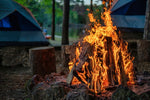
• Pyramid Fire Structure: Place small kindling vertically in a stacked pyramid shape with large firewood arranged on the outer layer. The layered structure supports steady airflow and gradual burning. It reduces sudden flame surges and fits long-duration stationary campsite use.
• Lean-To Fire Structure: Fix a primary supporting branch and lean thin wooden strips against the support to form a ventilated gap. This structure ignites quickly, concentrates heat efficiently, and resists mild wind interference, making it ideal for summer quick heating and simple cooking scenarios.
Drown, Stir, Feel: Expert Verified Full Fire Extinguishing Method
Incomplete campfire extinguishing causes most residual wildfire risks in summer camping areas. Wildland firefighting authorities widely recommend the standardized three-step Drown, Stir, Feel protocol for thorough fire shutdown, with clear step-by-step execution standards for all campers:
• Drown: Apply ample water to saturate the entire fire structure, covering all burning wood, embers, and surrounding ash. Full water penetration eliminates open flames and surface high-temperature points.
• Stir: Thoroughly agitate the wet ash and charcoal with a shovel to overturn layered combustion residues. This step exposes hidden deep-seated hot spots that easily lead to secondary re-ignition in dry summer conditions.
• Feel: Conduct a manual temperature check by gently touching the treated fire area. Confirm zero residual heat remains before leaving the campsite, ensuring complete fire extinction with no hidden risks.
Graded First Aid for Camping Fire Burns
Minor thermal contact occasionally occurs during campfire operation. Graded disposal ensures scientific treatment without excessive response. Mild redness and slight skin pain belong to first-degree burns requiring only continuous cool running water flushing and dry sterile protection. Local blistering and obvious swelling count as second-degree burns needing wound cleaning and sealed dressing to avoid external infection. Large-area blistering, broken skin, or charred tissue require immediate professional medical treatment. Timely and accurate judgment prevents secondary damage and ensures physical stability during outdoor camping.
Printable Summer Beginner Campfire Safety Checklist
• Check official park fire restriction levels before every camping trip
• Complete ten-foot flammable-free clear zone before fire setup
• Prepare water bucket and shovel and keep them within immediate reach
• Adopt standard pyramid or lean-to structure for stable campfire burning
• Execute Drown Stir Feel full cooling procedure before leaving campsite
• Master graded burn first aid skills for unexpected thermal contact
Summer outdoor exploration always balances immersive wild experience and rigorous field preparedness. Campfire safety is not complicated, yet it requires standardized execution and full-process vigilance. Beginners can completely avoid common summer campsite fire risks through regulated pre-trip checks, scientific setup methods, and thorough extinguishing habits. While manual operation standards lay the foundation for safe camping, intelligent peripheral monitoring further stabilizes overall campsite security. The LETWESAF camping perimeter alarm complements traditional fire safety protocols, providing long-term stable safety perception for outdoor and campsite environments and helping campers maintain reliable risk control throughout summer wilderness exploration.
Every successful outdoor adventure relies on precise preparation and disciplined field behavior. Standardized campfire skills turn primitive wild warmth into controllable camping comfort, allowing outdoor enthusiasts to explore and experience nature steadily with sufficient safety reserves.
What is the most challenging part of building and extinguishing campfires during summer camping? Which beginner fire safety habit do you think matters most for outdoor campsites? Share practical camping tips in the comments section.
Sources

